


Foodbank
Himmah runs Nottingham’s largest independent food bank, supporting individuals and families who are facing food insecurity. We provide a full week’s supply of food to anyone who needs help, with no restrictions on how often people can return.
Each month, we distribute over 1,000 food parcels to people experiencing difficult circumstances, including those who have lost their job, are waiting for benefits, refugees and asylum seekers, or are struggling with rising living costs. In 2025,, we distributed 11,176 emergency food parcels, offering vital support during times of crisis. We also provide Halal food parcels to ensure people can access food that meets their dietary needs. Since 2010, we have supported thousands of people across Nottingham with dignity, care, and compassion.

Foodprint
Foodprint is our social supermarket, offering quality surplus food at significantly reduced rates, typically around 70% less than high street supermarkets. We currently operate two locations in Sneinton and Radford, allowing people to shop for their own groceries in a supportive and respectful environment.
Foodprint on Wheels extends this service to communities with limited access to affordable fresh food. Our mobile shop now operates in both St Ann’s and Broxtowe, bringing fresh fruit, vegetables, and essential items directly into neighbourhoods where access can be challenging. The FoodPrint on Wheels project is supported by MTVH and Evolve CIC and plays an important role in reducing food waste while improving access to nutritious food for local residents.
Sneinton Store: 101 Sneinton Rd, Nottingham NG2 4QL
Radford Store: Unit 4 & 5, Forest Court, Gamble St, Radford, Nottingham NG7 4EX

Winter Hampers
Every winter, we work to ensure that children from low-income families can enjoy the warmth and joy of the festive season. Our Winter Goody Bag programme, partnering with 21 primary schools, provides gift hampers to children across Nottingham who may otherwise miss out.
Each hamper includes toys, books, treats, and small gifts chosen to bring comfort and happiness. We work closely with schools to identify families who need support, and our volunteers help pack and deliver each bag with care. In 2025, with the support of Nottingham-born company Ideagen, we increased the number of goody bags distributed through schools to 3,000 in total. For many families, these hampers are a powerful reminder that their community cares and that they are not alone.

Clothing Bank
The Nottingham Clothes Bank provides free clothing and toiletries to asylum seekers and refugees - people fleeing war, persecution, and climate catastrophe.. It opens three mornings a week, no referral needed, because it reject the hostile environment that treats refugees as problems rather than people.
Since April 2024, it’s distributed over 3,000 items of clothing and 800 toiletry packs through its 27 volunteers. For someone who has fled their home with nothing, arriving in a country that treats them with suspicion and bureaucracy, something as simple as a warm coat is both practical necessity and an act of welcome that says: you deserve dignity, and we’re glad you’re here. The Clothes Bank is grassroots solidarity, it’s mutual aid that says care is a form of resistance.

Muslim memory Project
The Muslim Memory Project addressed what mainstream British history had long ignored. It honoured Muslim soldiers from South Asia, Africa, and the Middle East who fought in both World Wars for an empire that colonised, exploited, and marginalised them. These soldiers had been written out of history and we tried to write them back in.
Through ‘When the Snow Melts’ and other exhibitions, the project reclaimed these stories and helped young people understand a fuller truth. British history has always been Black and Brown history, South Asian and African history, and Muslim history. Colonised soldiers were sent to fight and die, then erased from public memory. The project treated this erasure as an ongoing form of violence and used heritage as a way to challenge nationalist myths, honour forgotten ancestors, and connect past anti-colonial resistance to present-day struggles against racism.

Welcome Project
The Welcome Project supports newly arrived refugees and asylum seekers as they begin life in the UK and navigate an often complex and unfamiliar system. In partnership with Islamic Relief, we provide practical support, including help accessing healthcare, education, and housing, welcome packs with essential items, and connections to our Clothes Bank and Food Bank.
This work is rooted in care, dignity, and solidarity. Many people arriving in the UK face long periods of uncertainty, limited access to support, and significant barriers to rebuilding their lives. The Welcome Project exists to make sure people are not facing these challenges alone. By offering practical help and a sense of community, we aim to create a more welcoming and humane experience for those seeking safety, and to stand alongside refugees as they settle and move forward.

Zakat
Our Zakat project focuses on people in our city who are struggling to survive day to day. In partnership with the National Zakat Foundation, we provide small, targeted grants to people who qualify for zakat, including refugees and asylum seekers who are destitute or close to it. These are people who often fall through the gaps and are easily overlooked.
The grants are used for immediate needs. That might be food, travel, clothing, or covering a basic cost that is stopping someone from getting through the week. By working with the National Zakat Foundation, we are able to respond quickly and make sure support reaches people when they need it most.

Arts & Culture
Our arts work is about more than creativity. It is about using culture as a way to bring people together, tell our own stories, and build power in our communities. There is a long tradition across South Asian, African, and Caribbean communities of using art, music, storytelling, and education to organise, share knowledge, and imagine fairer ways of living. At Himmah, culture is not decoration. It is a tool for change.
Through our arts projects, we support community-led exhibitions, storytelling, performances, and creative programmes that connect lived experience to wider issues like racism, inequality, and belonging. This work helps people learn from one another, challenge harmful narratives, and build solidarity across communities. By centering people of colour and working class voices, our arts projects create space for reflection, learning, and collective action.

Himmah Hub
The Himmah Hub in Hyson Green is a shared space for working class communities of all colour to organise, support one another, and imagine better ways of living together. It was created during the COVID 19 pandemic in response to the inequalities faced by working class and racialised communities, and it continues to grow from that moment.
The Hub brings people together through food, learning, culture, and care. Across South Asian, African, and Caribbean communities, culture has long been a way to organise, educate, and support each other. At the Hub, culture plays an active role in building connection, solidarity, and collective strength. Today, the space is home to community kitchens, learning programmes, leadership development, cultural storytelling, and anti-racist work on hate crime and policy change. It is a place where people connect, share resources, and build strong networks of mutual support. If you are looking to book space for your group, activity, or event, you can click here

Cooking classes
Our cooking classes teach practical skills - but they’re also about reclaiming food knowledge that poverty has erased through chemical and preservative rich ready meals. We show people how to cook nutritious meals on tight budgets, yes, but we also create space to share recipes from all over the world but especially from South Asia and Africa - food traditions that carry memory, resistance, and belonging.
These sessions build more than cooking confidence. They build community among people who’ve been isolated by poverty and racism. They’re a small act of food independence, learning to feed ourselves and each other well, despite a system designed to keep us dependent. Every meal cooked from scratch is a refusal of the processed food poverty premium that extracts wealth and delivers limited value. This is mutual aid in action: sharing skills, supporting each other, and preparing food that nourishes both body and collective spirit.
Our courses will run 4 times and year and are always looking for people to enroll, if you’re interested fill in our form here
Power to Prosper - Nottingham Hub
Power to Prosper doesn’t tinker at the edges - it goes for the root. This three-year programme, run by the Runnymede Trust and New Economics Foundation, challenges the economic systems that have created and maintained poverty, particularly for people of colour, single parents, and disabled people.
We’re not interested in helping people “cope better” with broken systems. We’re building collective power to transform those systems entirely. Our Nottingham hub brings together people most impacted by poverty to lead campaigns for economic justice, fair social security, and financial systems that serve everyone, not just the wealthy. We name what’s really happening: our economy is designed to extract wealth from the working-class and communities of colour and concentrate it at the top. Power to Prosper is about taking that power back, not through charity or services, but through organising, advocacy, and building alternative economic structures rooted in cooperation, not exploitation.

Love Nottingham
‘Love Nottingham: No Place for Hate’ is a citywide campaign that has been bringing people together for the past two years to promote kindness, inclusion, and respect across Nottingham. The campaign encourages communities to stand against hate in all its forms and to celebrate what unites us.
In 2024, we held the One Love Singalong at the Brian Clough Statue, where hundreds of people gathered to sing Bob Marley’s One Love as a shared message of solidarity and care. In 2025, the campaign continued with another city-centre singalong, this time featuring All You Need Is Love by The Beatles, reinforcing the message that compassion and understanding are at the heart of a strong community.
Alongside these events, Love Nottingham works with local partners, schools, and community organisations, and shares positive messages throughout the city to encourage dialogue and togetherness. In 2026, the aim is to turn Love Nottingham into a festival across different sites in the city.

Empower-ed Space
EmpowerEd is a community learning and creative space based at the Himmah Hub, funded by Canva. It provides access to education, digital skills training, and creative opportunities for young people and community members.
The space includes areas for quiet study, group learning, digital workshops, and a small podcast and media studio. EmpowerEd supports people who may not otherwise have access to technology or suitable learning environments. The space helps people build skills, share ideas, and grow in confidence within a welcoming and supportive setting.

Community Gardening
Our community gardening work is delivered in partnership with the Nottz Garden Project. It began with a small guerrilla garden on Gamble Street in Radford and has since expanded to St Ann’s. Together, we are transforming underused land into shared spaces where neighbours grow vegetables, share skills, and spend time together.
These gardens are about more than growing food. They respond to the lack of access to fresh, affordable food in areas that have experienced long-term disinvestment. By growing food locally, we create spaces of learning, connection, and care. All produce is shared freely with local residents or used in our food bank, and we host community days like Tomato Day and Taco Day to bring people together. The gardens help build relationships, mutual support, and a stronger sense of community through working the land side by side.

Hot Meals
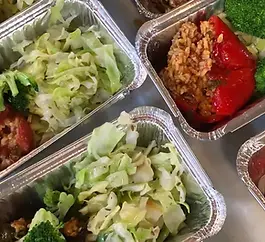
We’ve been providing hot meals to our community for over 15 years. What started as a small response to support refugees and asylum seekers has grown into a city-wide service for people facing the toughest times. Today, we work with local partners to make sure people can access a warm, nutritious meal with dignity. We hear far too often about people having to skip meals just to make ends meet. Our ambition is to change that, to make sure everyone in our community can count on at least three proper meals a day, with breakfast, lunch, and dinner available every week. We currently deliver this work alongside Wahda, the city’s largest Bengali-led organisation, and the African Institute, a collective representing African diaspora communities across Nottingham.

Hate crime work
Our hate crime work supports people who experience racism, Islamophobia, and other forms of discrimination, while also challenging the systems that allow hate to go unchecked. We combine community support, education, and advocacy to make sure people are not facing these experiences alone. This includes advice and casework support, arts-based projects that help people share their experiences safely, and work that links lived experience to policy change and public accountability. Our approach is community-led, rooted in trust, and focused on building long-term justice rather than short-term fixes.
